Cloudflare’s Agent Controls Need a Traffic Test
Cloudflare now lets site owners separate supported personal AI agents from other automated traffic, inspect their requests, and set agent-specific access policies. That is useful infrastructure, but not proof that allowing or blocking an agent improves revenue or security. Operators should measure where agents go and what customers accomplish before turning a new control into a blanket policy.
Key Takeaways
- Cloudflare added personal-agent analytics and agent-specific access choices.
- Agent identity does not prove a user authorized a particular action.
- Blanket blocking may remove customer traffic along with unwanted automation.
- Operator posture: run a small test before changing sitewide policy.
What did Cloudflare actually launch?
Cloudflare’s November 4 announcement adds a Personal Assistants category to Security Analytics. Site teams can view supported agents, request volumes, requested paths, status codes, and source networks. Customers using Account Abuse Protection, which Cloudflare labels early access, can also associate agent activity with a hashed user identifier during login and sign-up flows.
The accompanying product changelog says operators can set individual policies for top supported personal agents. Available choices are allow, block, or block on pages where Cloudflare detects advertising. The broader Search and Training settings remain separate.
This is a deployment of Cloudflare controls, not evidence that personal agents reliably complete purchases, reduce support work, or increase fraud. Cloudflare does not publish supported-agent coverage, identification error rates, customer conversion data, or plan-by-plan availability in the announcement.
Why is agent identity not enough?
The change helps answer which supported agent operator sent a request. Cloudflare’s Web Bot Auth documentation describes cryptographically signed HTTP requests, while other verified bots may use published IP ranges or reverse DNS. The active Web Bot Auth protocol draft is an IETF Standards Track Internet-Draft dated October 29, 2026—not a final Internet Standard—and may change. Its scope is narrow: it lets servers verify an agent’s cryptographic identity, while explicitly leaving human authentication, authorization, and delegation out of scope.
Cloudflare separately says its early-access Account Abuse Protection can associate personal-agent login and sign-up events with site-account context, including a hashed user identifier. That can help fraud teams investigate account activity, but it does not itself prove who instructed the agent, what that person authorized, or whether an action should bypass normal fraud, consent, payment, or account controls. Cloudflare identifies privacy-aware user context, reputation, and accountability as further work.
That distinction matters as agents move from reading pages to acting across systems. Our guidance on autonomous-agent authorization and agent access rights in SaaS contracts applies at the website edge too: verified identity is one control layer, not a permission grant.
What should website operators do now?
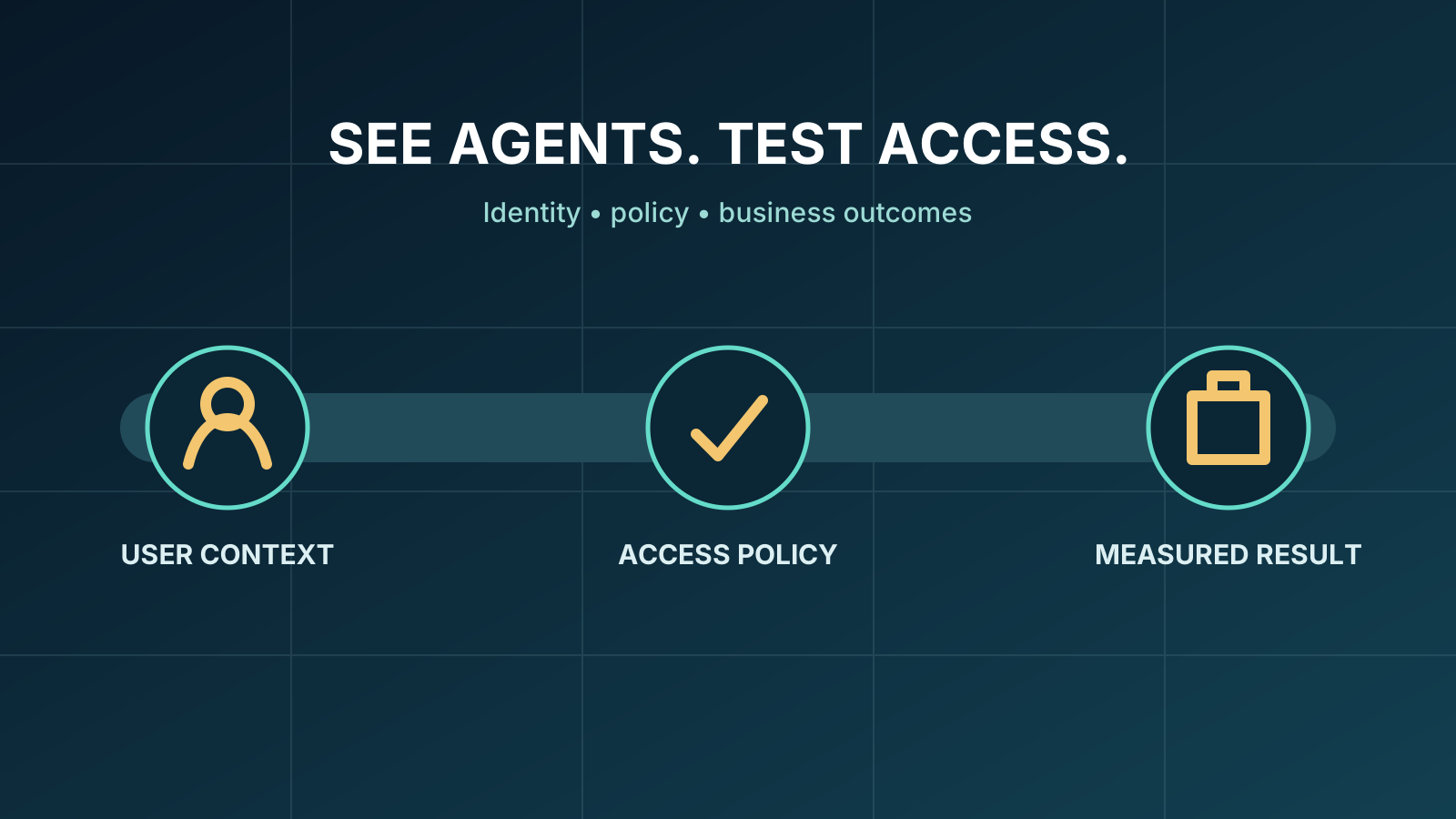
Run a small test, not a sitewide reflex. First, record seven to fourteen days of personal-agent volume, paths, error rates, login events, and completed business outcomes. Separate public content discovery, authenticated support, account changes, and checkout; they do not carry equal risk.
Then change one supported agent’s policy on a lower-risk zone or test property. Compare successful sessions, support deflection, conversion, false blocks, suspicious logins, and customer complaints with the baseline. Keep normal authentication, authorization, rate limits, payment confirmation, and fraud checks in force. Do not treat a “verified” label as user consent.
Cloudflare’s policy documentation says new domains default Search, Agents, and Training to allow, while personal agents inherit the general Agents policy unless overridden. Operators should therefore audit defaults even if they make no immediate change.
Watch next for published supported-agent lists, identification accuracy, action-level user authorization, pricing and plan details, and named customers connecting agent traffic to accepted transactions. Until then, use the controls to learn—not to assume all agent traffic is either valuable or hostile.
FAQs
Should every website allow personal AI agents?
No. Public discovery, account access, and transactions have different value and risk. Measure each before setting policy.
Does Web Bot Auth prove the customer approved an action?
No. It can authenticate an agent operator’s request; it does not by itself prove user identity, intent, or transaction authority.
Should operators block unsupported agents?
Not automatically. Apply existing bot, authentication, rate-limit, and fraud controls while measuring false blocks and business outcomes.