Firefox Enterprise Makes the Browser an AI Control Point
Mozilla announced Firefox Enterprise on October 12, and version 158 became the first release on October 13. The product makes the browser a potential control point for AI access and sensitive-data movement. Operators should ask sharper vendor questions and test enforcement, not treat the launch as proof that those controls work reliably across their environment.
Key Takeaways
- Version 158 is an early-access release requiring a customer-hosted Admin Console.
- DLP, domain, identity, audit, extension, and device controls are documented capabilities.
- Pricing, independent testing, and named customer outcomes remain unavailable.
- Operator posture: ask sharper vendor questions, then run a bounded control test.
What did Mozilla actually release?
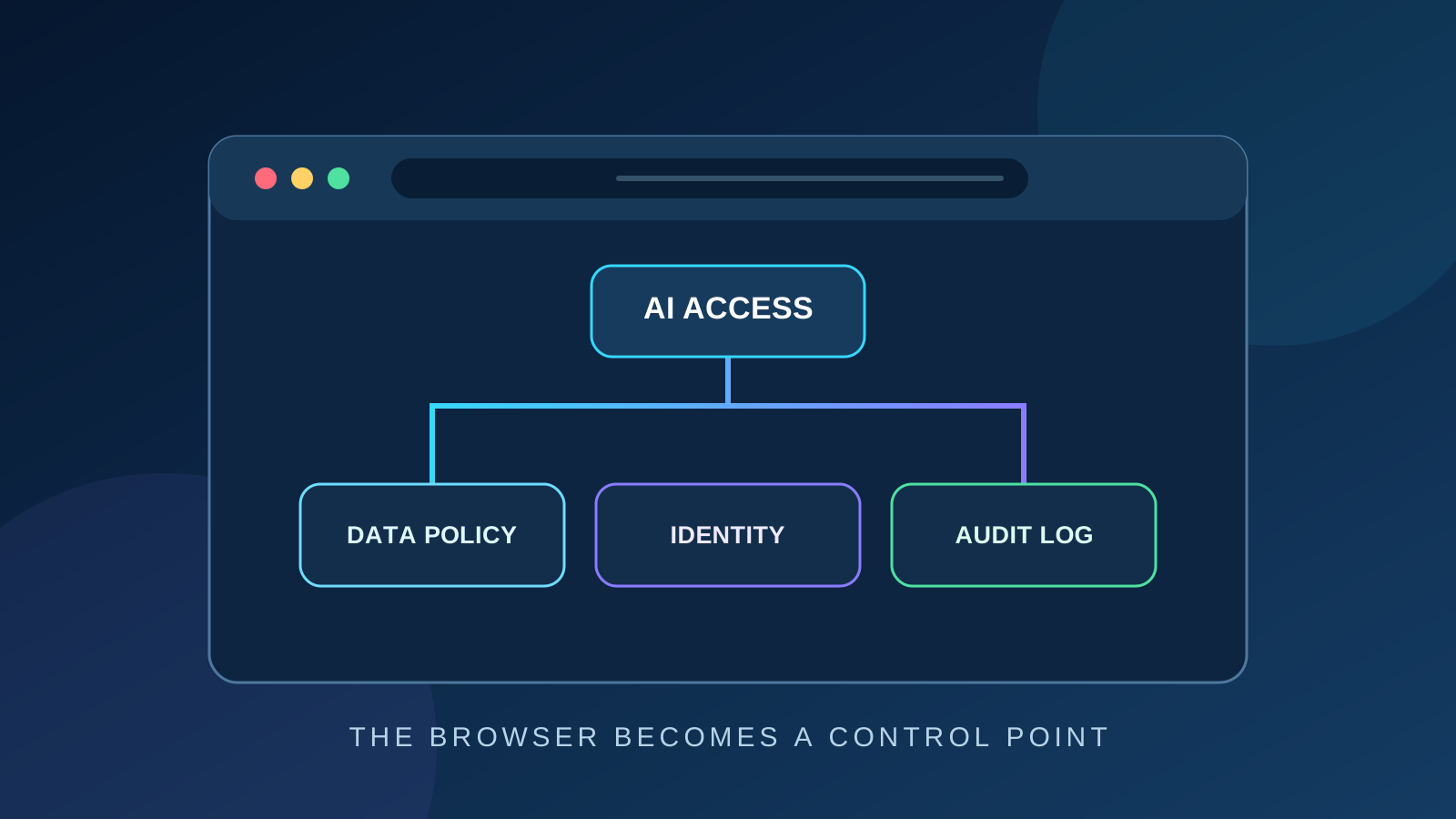
Firefox Enterprise is a commercial management layer around Firefox, not a model or agent. Mozilla’s release notes document on-premises management, OIDC sign-in, device-posture checks, audit logs, SIEM integration, service accounts, extension controls, update controls, and more than 130 centrally managed policies. They also describe domain-level DLP actions for paste, uploads, downloads, and printing, including blocking paste into unapproved AI tools.
This is not broad self-service availability. Version 158 requires an Admin Console and supporting services deployed on the buyer’s infrastructure, and organizations must request early access. Mozilla’s product page says the offer is initially focused on France, Germany, Austria, and Switzerland.
Public documentation is no longer the main gap. The release notes explain data flows, telemetry and external connections, while Mozilla provides a Firefox Enterprise Trust Center for security diligence. Missing evidence now includes public pricing, independent security testing, named customer outcomes, and a timetable for broader commercial availability.
Why does the browser matter for AI governance?
Employees reach public AI tools, embedded assistants, and extensions through the browser. A policy saying “use approved AI” is weak if administrators cannot block a prohibited transfer or reconstruct what happened.
Mozilla separately offers consumer-facing AI feature controls. Firefox Enterprise goes further by documenting domain, data-action, identity, extension, and device controls. Those capabilities are relevant to the control-plane problem described in our shadow-AI briefing and prompt-injection permissions analysis.
But documentation is not deployment evidence. Buyers still need to establish whether policies apply consistently, resist ordinary bypasses, cover unmanaged devices, avoid excessive false blocks, and produce useful audit records without creating an unreasonable support burden.
How should operators test it now?
Use one regulated or data-sensitive team. Configure an approved AI domain, a blocked AI domain, a sensitive-file upload, a prohibited paste, an extension that calls an external model, and one unmanaged device. Measure enforcement consistency, false blocks, bypass success, event completeness, policy-change latency, and help-desk effort.
Before considering a browser-standard change, request pricing, supported operating systems, high-availability requirements, policy precedence, SIEM schemas, update and rollback behavior, and evidence from independent testing. Prepare to adopt only if the pilot closes a real control gap more cleanly than existing DLP, proxy, endpoint, or secure-browser controls.
Watch next for broader availability, published pricing, independent security results, and named deployments with measured enforcement and operating costs.
FAQs
Is Firefox Enterprise generally available worldwide?
No. Version 158 requires requested early access, a customer-hosted Admin Console, and currently has a four-country sales focus.
Are AI and DLP controls only marketing claims?
No. Mozilla documents domain and action controls, including paste and upload restrictions. Their consistency and bypass resistance still require buyer testing.
Should companies switch from Chrome or Edge now?
Not on the release alone. Test one control gap and compare enforcement, audit quality, and operating burden first.