Google's Bug-Bounty Pause Is a Triage Warning
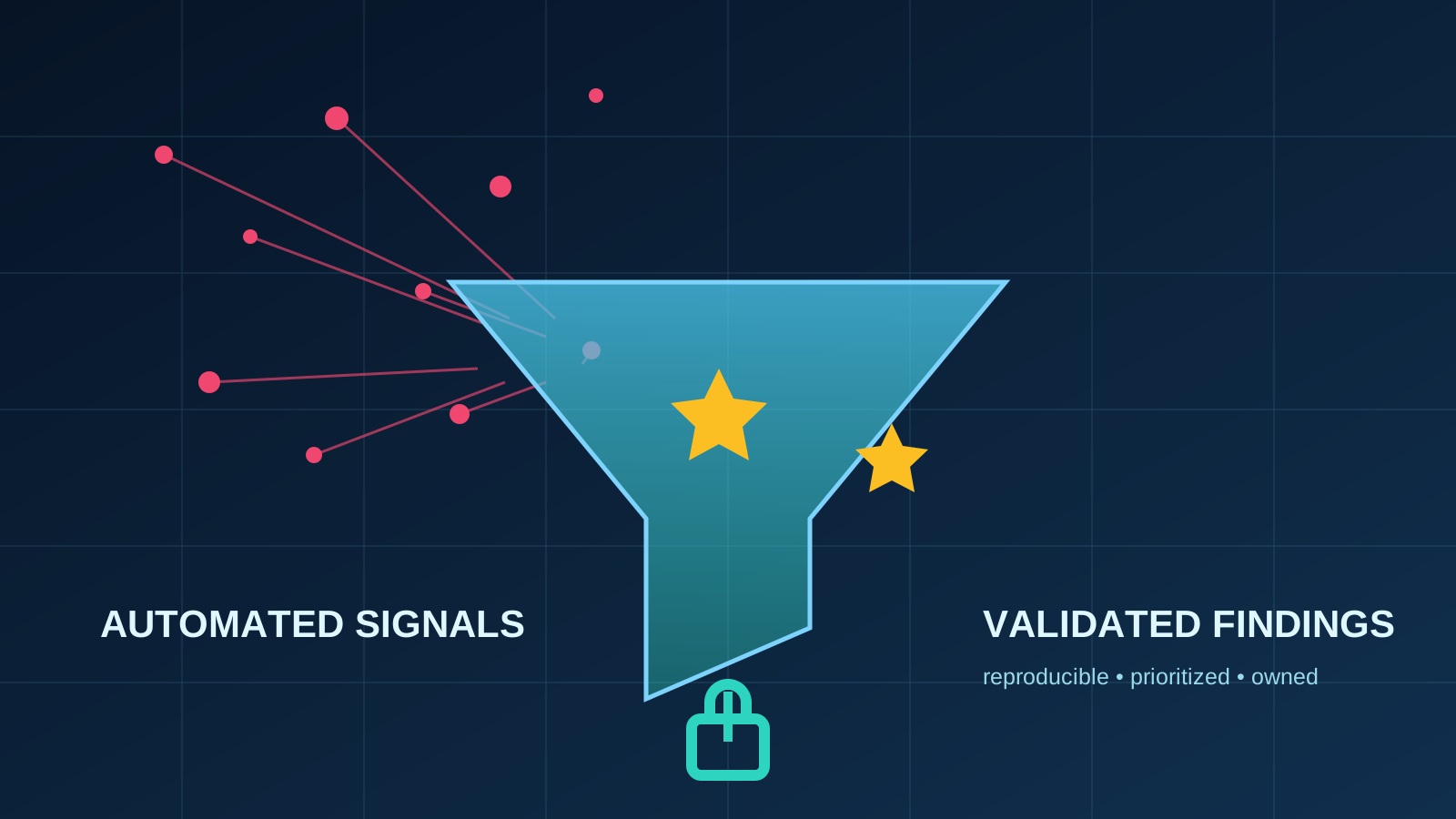
Google stopped accepting new product-vulnerability reports through its Open Source Software bug-bounty program on October 1 after a surge in automated submissions it said were mostly invalid. The lesson for operators is not to reject AI security tools. It is to buy and measure validated findings—not raw alert volume.
Key Takeaways:
- Google’s pause is limited; supply-chain and existing reports remain in scope.
- Automated discovery can create more review work than security value.
- Vendors should report validation rate, duplicate rate, and reviewer effort.
- Operator posture: run a small test before scaling AI-generated security intake.
What did Google pause in its bug-bounty program?
Google’s current OSS VRP rules say new product-vulnerability submissions are paused, while supply-chain reports, outstanding reports, some Google Cloud repository reports, and patch rewards remain available. Google promises an update in the first quarter of 2027.
This was not a sudden objection to AI-assisted research. In March, Google had already told researchers that AI can accelerate discovery but its outputs must be validated, after observing a surge in low-quality and invalid OSS VRP reports. The company tightened submission requirements before taking the narrower October pause.
Google said directly that the “vast majority” of increased automated submissions were invalid; TechCrunch independently reported the pause. Google has not published the number of submissions, the false-positive rate, reviewer hours consumed, or which tools produced them. Those missing measures matter more to a buyer than the label “AI-generated.”
Why does this matter beyond bug bounties?
AI lowers the cost of producing plausible findings faster than many organizations can verify them. That can turn a security workflow into a queue-management problem: analysts spend scarce time reproducing false positives, maintainers receive duplicate issues, and credible findings wait behind polished but unactionable reports.
The pressure is broader than one Google program. BleepingComputer documented the remaining Google reporting paths and similar pressure on other programs. Microsoft says the pace and breadth of vulnerability discovery are increasing, while describing its own use of automated validation, prioritization, and continued human review.
Operators should therefore separate discovery capacity from decision quality. The same distinction applies to AI-generated zero-day evidence: finding more possible flaws is useful only when the workflow can establish reproducibility, impact, ownership, and remediation priority.
How should operators test AI security tools now?
Run a small test. Feed one AI scanner or research agent a bounded application or repository for two to four weeks. Keep write access off. Require every finding to include affected code, reproduction steps, evidence of reachability, likely impact, confidence, and a proposed owner.
Measure confirmed findings per analyst hour, false-positive and duplicate rates, median time to validate, remediation acceptance, and time spent correcting reports. Compare those figures with the existing scanner or manual process. A vendor that leads with “findings generated” but cannot export validation outcomes is selling activity, not security value.
Also ask whether the tool learns from rejected findings, preserves evidence for audit, separates unverified hypotheses from confirmed issues, and prevents sensitive code from leaving approved boundaries. Connect the test to the organization’s agent inventory and policy controls rather than treating a security agent as exempt from normal governance.
Watch next for Google’s Q1 2027 redesign, published quality thresholds, stronger proof requirements, and evidence that automated triage improves confirmed-findings throughput without hiding valid reports.
FAQs
Did Google close its entire bug-bounty program?
No. The pause covers new product-vulnerability submissions to the OSS VRP. Other Google vulnerability programs, OSS supply-chain reports, outstanding reports, and patch rewards remain available.
Does this prove AI vulnerability research is ineffective?
No. It shows that inexpensive report generation can overwhelm intake when validation does not scale with discovery. AI-assisted research can still help when reproducibility and impact are verified.
What metric should a buyer request first?
Ask for confirmed, non-duplicate findings per analyst hour. Then request false-positive rate, validation time, remediation acceptance, and the human effort required to correct each report.