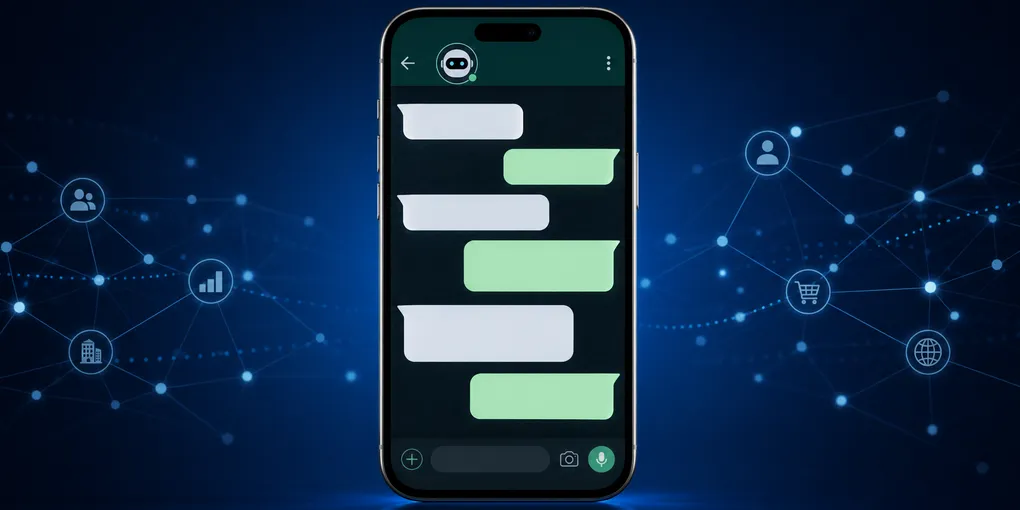
Meta Business Agent Is Now Live for All Businesses
Meta launched its Business Agent globally on June 3 — making AI customer support available to every WhatsApp, Instagram, and Messenger business account at no initial cost. More than one million businesses had already used predecessor chatbot tools before this launch, and over one billion customer threads run daily on Meta’s platforms. For operators with WhatsApp or Instagram presence, this is now the lowest-friction path to AI customer interaction available. The blocking question before connecting production data: what does Meta do with it?
Key takeaways:
- Meta Business Agent is globally available today; any business can activate it free on WhatsApp, Instagram DMs, and Messenger.
- The enterprise Business Agent Platform connects to Shopify, Zendesk, Shopee, and hundreds of systems; large businesses pay by token usage.
- Meta’s launch announcement does not specify enterprise data retention, ad-system isolation, or opt-out terms.
- Posture: run a small test on low-risk public Q&A; hold off on connecting production customer records until Meta publishes enterprise data handling terms.
What Did Meta Actually Launch?
Two tiers. Meta Business Agent is the free consumer layer: embedded in WhatsApp, Instagram DMs, and Messenger, it answers customer questions, recommends catalog products, books appointments, qualifies leads, closes sales, and routes to a human agent when needed. Setup takes minutes; paid subscription tiers for smaller businesses arrive in coming months.
Meta Business Agent Platform is the enterprise layer. It connects Business Agent to hundreds of third-party systems — Shopify, Zendesk, Shopee, and more so the agent can read inventory, customer histories, and transaction records and act on them. Enterprise controls, guardrails, and measurement are included; token-based billing applies at scale. The enterprise controls and pricing are not fully finalized.
Why Does the Data Question Matter Before You Scale?
Meta’s channel-native model is its structural advantage over Salesforce Einstein or Zendesk AI: your customers are already in WhatsApp, no migration required. One billion daily business threads makes this the widest-reach AI customer interaction layer available.
That same position creates a governance question. When you connect the Business Agent Platform to your Shopify store or Zendesk tickets, Meta’s infrastructure reads your customer conversations and business data. Meta’s launch announcement does not specify retention windows, whether conversations inform ad targeting or model training, or what enterprise opt-out controls exist. Reuters confirmed Meta’s enterprise ambitions — formal DPAs should be coming, but they are not here yet. Enterprise operators using Microsoft, Salesforce, or Google Cloud AI typically receive a published Data Processing Agreement before connecting customer records; Meta has not yet published an equivalent.
Token billing also introduces the same budget-discipline problem AdvancedAI tracked in Microsoft and Uber’s AI cost overruns: multi-turn agentic conversations consume tokens in loops, and uncapped enterprise deployments can accelerate spend faster than seat-license budget math assumes.
What to do now: Run a small test on the free tier using your public product catalog Q&A. Do not connect production customer records, transaction data, or internal CRM systems until Meta publishes enterprise data handling terms. When those terms arrive, ask specifically about ad-system data isolation, training opt-out scope, and DPA coverage before expanding.
What to watch: Meta’s published enterprise DPA and privacy terms for the Business Agent Platform; token pricing when paid tiers launch; whether major CRM and support vendors respond with tighter WhatsApp integrations; and whether the Platform gains meaningful traction outside WhatsApp-heavy markets in India and Southeast Asia.
FAQ
How does Meta Business Agent compare to AI tools already in Salesforce or Zendesk? The key difference is channel placement. Meta’s agent lives inside the apps your customers already use — no migration required. Salesforce and Zendesk AI run inside CRM and ticketing platforms reached through your website or support portal. Meta’s reach is larger by volume; the open governance question is what enterprise operators should resolve before committing production data at scale.
What should I ask Meta before connecting customer data to the Business Agent Platform? Ask for a Data Processing Agreement covering: what conversation and transaction data is retained and for how long; whether any data informs Meta’s ad targeting or model training; what enterprise opt-out controls exist; and what happens to data if you stop using the platform. Until those terms are published and reviewed, limit integration to your public product catalog and avoid connecting systems that hold personal customer records.