Nvidia Reportedly in Talks to Back OpenAI's Ohio Campus
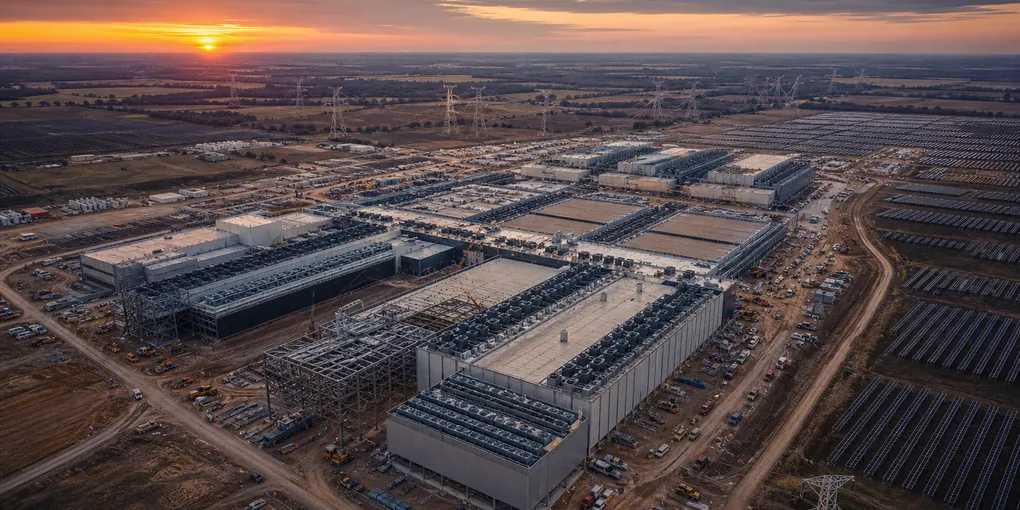
The Wall Street Journal reported Sunday (paywalled; confirmed by Reuters) that Nvidia is in talks to provide a roughly $250 billion financing guarantee for OpenAI’s planned 10-gigawatt data center campus in Piketon, Ohio. The campus is being developed by SoftBank’s SB Energy subsidiary on a former DOE site in Pike County. Total project cost — including chips, power infrastructure, and construction — could exceed $500 billion. Neither Nvidia nor OpenAI confirmed the talks.
Key takeaways:
- Per WSJ’s unnamed sources, Nvidia is reportedly in talks to guarantee ~$250B in lease and debt financing — no agreement is signed
- Chip purchase financing (reportedly up to $350B more) is a separate, unresolved discussion
- OpenAI reportedly lacks investment-grade credit; a Nvidia backstop, if agreed, would let it secure a 20-year lease it cannot take independently
- The first 800 MW phase is not expected until 2028; the campus is unbuilt and the financing is unconfirmed
- For enterprise buyers: no near-term supply change; the reported talks signal a deepening Nvidia-OpenAI financial relationship worth monitoring
What is the structure of this deal, and why would Nvidia do it?
This is not a conventional equity investment. Per NetworkWorld’s reporting, Nvidia would guarantee OpenAI’s lease and debt obligations to SB Energy — so OpenAI can take on a 20-year commitment without investment-grade credit. Nvidia is also reportedly discussing financing chip purchases worth up to $350 billion more.
The incentive structure is circular: Nvidia finances infrastructure that will purchase Nvidia hardware. “When a chip supplier guarantees a customer’s lease,” analyst Sanchit Vir Gogia of Greyhound Research told NetworkWorld, “the relationship stops being vendor and customer. It becomes a sponsor and a tenant.” That dynamic is worth tracking regardless of whether this particular deal closes — it describes a trajectory, not just a transaction.
What does this mean for operators buying OpenAI today?
In the near term: very little. OpenAI’s compute still runs through Microsoft Azure, AWS, and Google Cloud. The Piketon first phase is not operational until at least 2028, the financing is not agreed, and the campus is not built.
The structural direction matters more. As we covered when Microsoft and OpenAI began formally decoupling in May, OpenAI has been moving toward infrastructure independence. If the Ohio financing were confirmed, operators who have built workflows around OpenAI’s managed deployment model could find themselves exposed to a single Nvidia-OpenAI financial ecosystem — not an immediate risk, but a concentration dynamic worth mapping now.
Counterpoint Research’s Neil Shah framed the CIO posture plainly: “Negotiate and demand that OpenAI uses a mix of capacity so all your eggs are not in one premium basket like Nvidia.”
What to do now: The financing is not signed and the campus is years away — no operational change is warranted. Run a concentration audit: map how much of your AI workload runs on OpenAI and through which cloud provider. At your next vendor review, ask whether contracts include model-portability terms and capacity-provider diversity provisions. Watch for a signed financing agreement, an official campus timeline from OpenAI or SB Energy, or changed enterprise pricing terms — those are the signals that would make this actionable.
Operator posture: keep watching.
Frequently Asked Questions
Does Nvidia’s financing role change what OpenAI charges enterprises?
Not yet, and possibly not for years. OpenAI’s pricing flows through Azure, AWS, and Google Cloud today. If Piketon campus capacity were to come online and OpenAI shifted supply there, pricing structures could change in either direction — but neither the deal nor the timeline is confirmed. No public announcement has been made about how campus capacity would be priced for enterprise buyers.
Should this deal change how I think about multi-vendor AI strategy?
It is a structural risk signal worth tracking, not an immediate operational problem. Operators running multi-vendor AI strategies — Claude on Bedrock alongside OpenAI on Azure, for example — are less exposed to a single Nvidia-OpenAI financial ecosystem. Fully OpenAI-committed buyers should verify their contracts include pricing-change protections and clear exit provisions.
What is the Piketon, Ohio site, and how real is this project?
The campus would occupy the former Portsmouth Gaseous Diffusion Plant in Pike County, Ohio. In March 2026, the DOE and Department of Commerce announced a public-private partnership with SoftBank and AEP to develop 10 GW of new power generation there. The site and federal partnership are confirmed; the OpenAI lease and Nvidia guarantee are in negotiations, with no official timeline or structure announced by either company.