ChatGPT Work Is OpenAI's Move Into Your Workflows
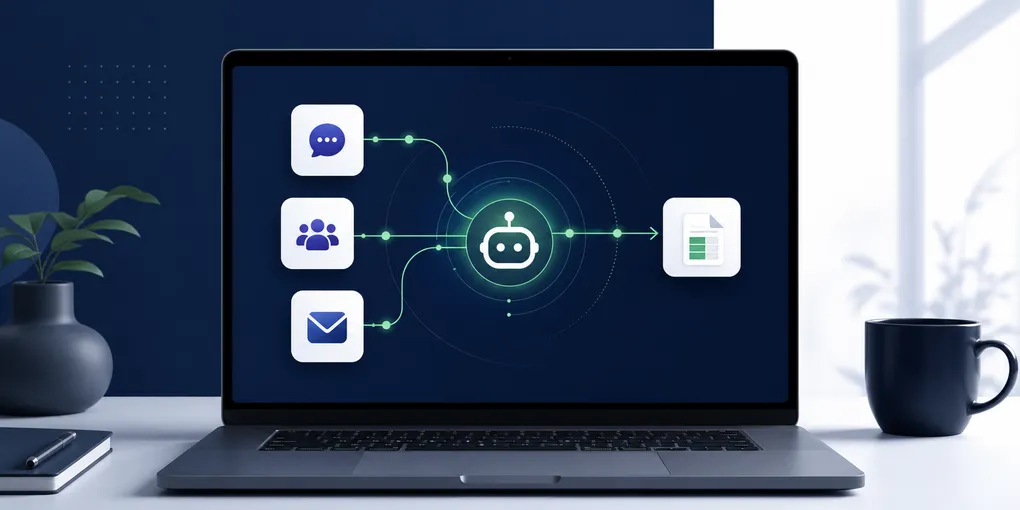
OpenAI launched ChatGPT Work on July 9 — an autonomous agent that executes multi-step tasks across your business applications, runs projects for hours, and schedules recurring jobs. It is live now for Pro, Enterprise, and Edu users, powered by GPT-5.6.
The operator question: what happens when an AI agent has write access to your CRM, your email, and your project management software — and what your audit trail looks like when something goes wrong.
Key takeaways
- ChatGPT Work runs multi-step tasks across Slack, Teams, Drive, SharePoint, email, and CRM for hours if needed.
- It can schedule recurring jobs and produce finished documents, spreadsheets, and presentations.
- OpenAI says it uses ChatGPT Enterprise security controls, including a Compliance API for audit visibility.
- Agent runs moved to token-based pricing on July 6; complex Work sessions cost more than standard chats.
- Run a small test on low-risk workflows before connecting sensitive systems.
What did OpenAI actually launch?
ChatGPT Work is a workplace automation layer on top of ChatGPT. Where ChatGPT answered questions, ChatGPT Work executes jobs. A user can hand it a task — “analyze last month’s budget variance and update the board slides” — and it navigates connected tools, creates outputs, and checks back when it needs guidance.
Confirmed capabilities per OpenAI’s announcement: cross-app task execution across Slack, Teams, Drive, SharePoint, email, calendars, and CRMs via a plugins directory; scheduled and event-triggered task automation; local file access via the desktop app; and an ultra mode that coordinates four agents in parallel for demanding tasks.
Per Computerworld, GPT-5.6 Sol is $5 per million input tokens and $30 per million output via the API. The Codex rate card moved to token-based pricing on July 6 — a complex Work session costs meaningfully more than a standard chat.
Why does this raise new operator questions?
A better chatbot is a productivity tool. An agent connected to email, calendar, CRM, and internal files with permission to take actions is a different category of access.
Firstpost reports that ChatGPT Work uses the same security framework as ChatGPT Enterprise: administrators can restrict data access, control active plugins, and limit permitted actions. A Compliance API provides audit visibility into conversations and agent actions. Those controls are meaningful — but they are not self-enforcing. Someone must configure them before employees start connecting tools.
Four questions to answer before expanding access:
- Data scope: Which systems can Work read and write? What prevents employees from self-connecting sensitive libraries?
- Action limits: Where is the boundary between Work recommending an action and taking it autonomously?
- Audit depth: What does the Compliance API log, how long is it retained, and is it exportable for compliance review?
- Token cost at scale: What happens to your AI budget when hundreds of employees each run weekly multi-step tasks?
What to do now
For Enterprise and Edu users already on OpenAI: test ChatGPT Work on low-risk internal workflows — draft generation, research summaries, project updates — where a human reviews output before it goes anywhere. Enable and review the Compliance API before you need it.
For Business and Plus users (rolling out over the next few days): decide which app integrations to allow before employees self-connect them. A plugins directory is a data governance policy, not just a feature.
Context on what this has been building toward: the April briefing on OpenAI’s superapp trajectory. Settle what “permitted actions” means for your organization before rollout scales.
Watch for: OpenAI documentation on default action permissions, Compliance API retention/export terms, and admin-level plugin lockdown. Also track enterprise AI token cost signals — agent runs at scale are a different budget line from per-seat subscriptions.
FAQ
What is ChatGPT Work and how is it different from regular ChatGPT? ChatGPT Work executes multi-step tasks across connected business apps — Slack, Teams, email, CRM, Drive — rather than answering questions in a chat. It runs projects for hours, produces finished documents and spreadsheets, and schedules recurring jobs autonomously.
Does ChatGPT Work have enterprise security and audit controls? OpenAI says it uses the same security framework as ChatGPT Enterprise: admins can restrict data access, control active plugins, and limit permitted actions. A Compliance API provides audit visibility into agent actions. Log retention and export specifics are not fully documented at launch — verify before committing sensitive workflows.
How does ChatGPT Work pricing work? GPT-5.6 Sol costs $5 per million input tokens and $30 per million output via the API. Agent runs in Business and Enterprise plans moved to token-based pricing on July 6. A complex multi-step Work session consumes significantly more tokens than a standard chat. Benchmark against a real workflow before broad rollout.